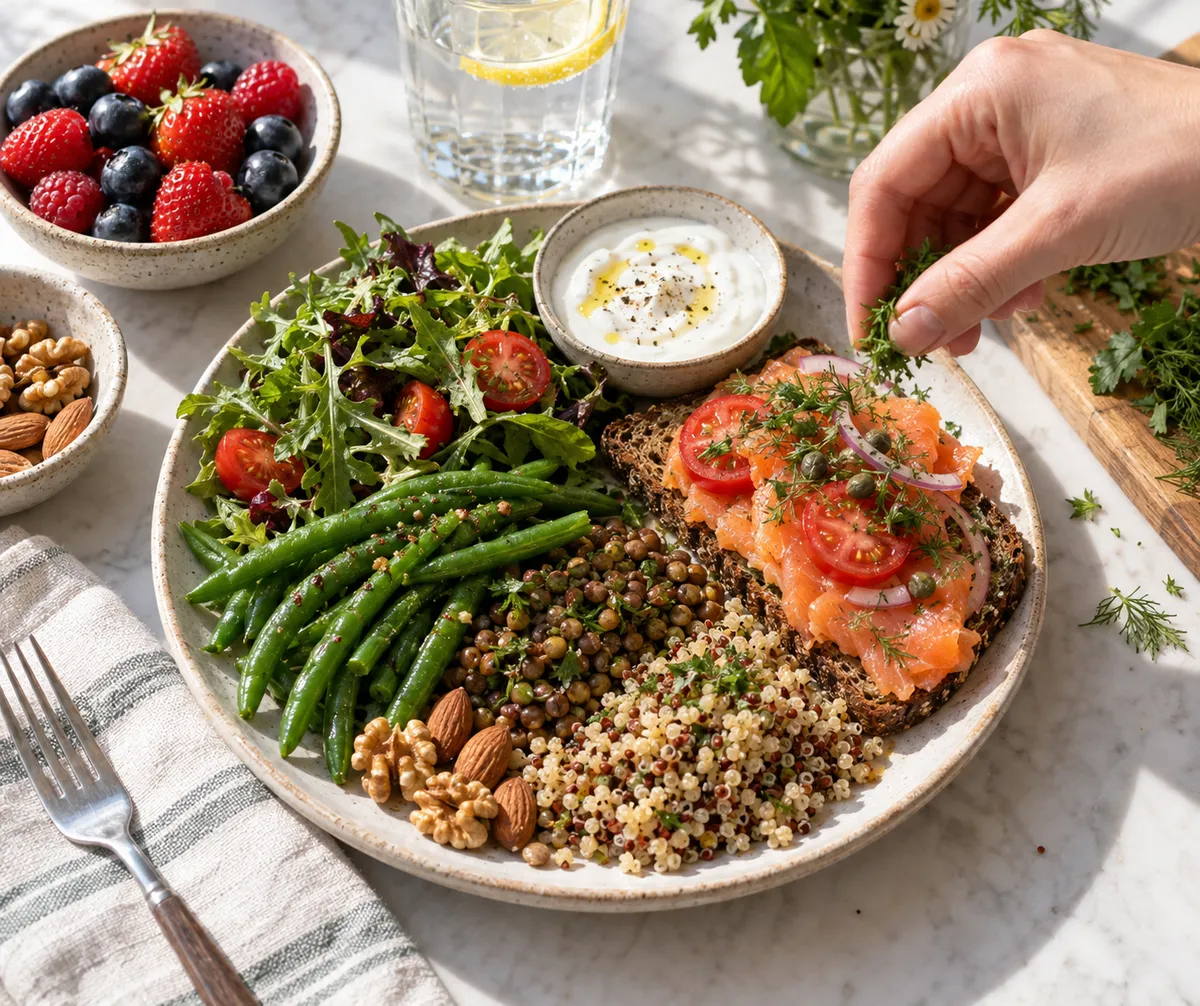

Women's Health has a new explainer on a question that haunts desk lunches everywhere: can a shake actually replace a meal? The magazine turned to a dietitian to sort out when meal replacement shakes and powders can be useful, how they differ from protein powders, and what to look for nutritionally. It also rounds up a few recommended products, which we'll get to.
The short version of our take: the word "meal" is doing a lot of heavy lifting on those labels, and it's worth checking whether the product earns it.
Why shakes are having a moment
Per Women's Health, the appeal is easy to understand. Busy schedules, rising food costs, and a wellness-flavored love of convenience are nudging people toward meal replacements, especially people who might otherwise skip a meal or default to takeout.
The flip side, as the piece notes, is a crowded supplement market that makes it harder to tell which products are actually meal-worthy. Walk down any aisle or scroll any feed and everything is "complete," "clean," or "fuel." Those words are marketing. They aren't a nutrition panel.
Our angle: a shake is a meal only if it acts like one
The most useful distinction in the Women's Health piece is between meal replacements and protein powders. They can look identical in a shaker bottle, but they're built for different jobs. A protein powder is typically a supplement to the rest of your eating. A meal replacement is meant to stand in for a whole plate.
That's why the dietitian's checklist centers on the stuff a balanced meal would actually provide: calories, protein, fiber, and ingredients. It's hard not to see the logic. If a drink has the satiety of a sip of juice, you'll be rummaging through the pantry by 3 p.m., and the "meal" will have been a warm-up act.
What to check on the label
Based on the factors Women's Health highlights, a sensible label scan looks at:
- Calories: Does it add up to something resembling a meal rather than a snack?
- Protein: Enough to keep you full, not just a token gram count.
- Fiber: The thing most easily missed in a smoothie-style drink.
- Ingredients: What's actually in it, and whether any of it tends to bother your stomach.
That last point is worth a beat. Women's Health also flags drawbacks, and tolerability is part of real-life use. A shake that leaves you bloated isn't convenient, it's a plot twist.
The picks Women's Health highlighted
The piece names three products:
- Best Overall: Huel Black Edition Ready-to-Drink
- Best Powder: Ka'Chava Superblend Shake
- Best Allergen-Friendly: OWYN Plant-Based Protein Drink
We're only reporting the category labels here, since those are what Women's Health assigned. We can't vouch for nutrition numbers beyond that, so check each product's own label against the criteria above. That's rather the point of the exercise.
There's a nice bit of pop-culture symmetry in the lineup, too. Ready-to-drink bottles, a scoop-and-shake powder, and an allergen-friendly option map neatly onto how people actually live: the grab-and-go commuter, the home-kitchen tinkerer, and the person who has to read every label twice anyway.
Treat it like a tool, not a personality
The healthiest way to read this story is to see shakes as a backup plan. Women's Health frames them around real-life use, for the days when the alternative is skipping lunch or ordering takeout again. That's a fair bar. Nobody is auditioning a shake to replace dinner with friends.
So here's the sharpest takeaway: the best meal replacement isn't the one with the loudest packaging or the most influencer-friendly tub. It's the one that passes the plate test. If it wouldn't hold up as a meal on a plate, a nicer bottle won't change the answer.