
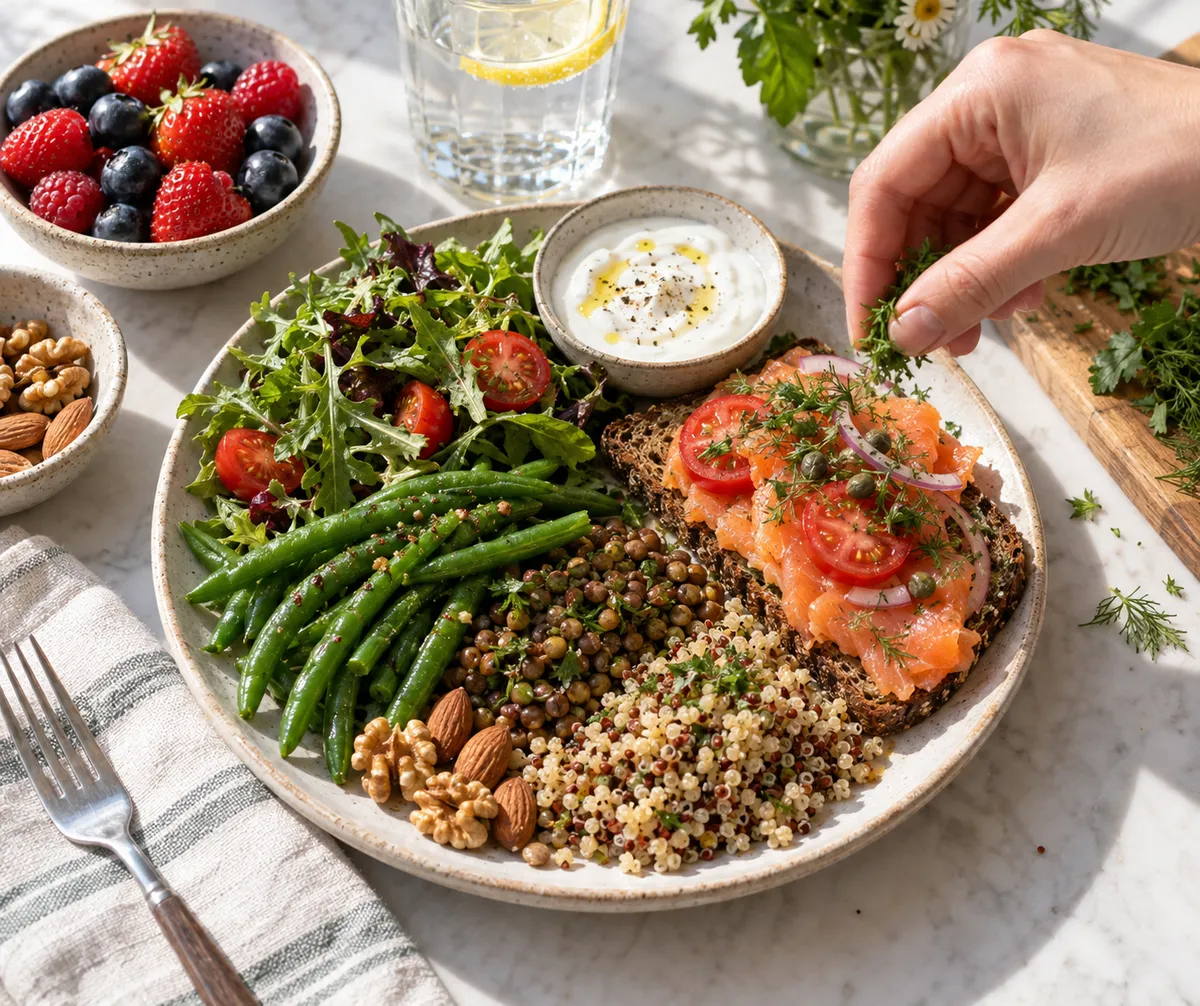
New research links 10 diet patterns with slower biological aging, according to a roundup from Women's Health. The patterns that show up are mostly built around plant foods, whole grains, and minimally processed ingredients. The headline finding is refreshingly un-dramatic: there's no single "perfect" longevity diet. What matters most, per the report, is consistent diet quality.
In a wellness world where the anti-aging aisle is basically a sci-fi set, that's almost rebellious.
The Lineup
According to the report, the 10 patterns are:
- Mediterranean diet
- Nordic diet
- DASH diet
- MIND diet
- Alternate Healthy Eating Index (AHEI)
- Plant-based Diet Index
- Healthful Plant-based Diet Index
- Unhealthful Plant-based Diet Index
- Dietary Inflammatory Index
- EAT-Lancet / Planetary Health diet
The source piece doesn't detail the numbers behind each one, so we won't invent any. What we can say is the shared theme: plants, whole grains, and foods that don't arrive with a long ingredient list.
The Plot Twist Is the Lack of a Winner
Longevity has become a full-blown obsession, with biological age (how old your body seems to be, as opposed to the number on your birthday cake) as the new status symbol. Yet the research summarized by Women's Health points to something less glamorous than a secret protocol: everyday eating patterns can influence how well people age.
The list itself is telling. It includes diets with the polish of a brand (Mediterranean, Nordic) and others that read like lab-report titles (Dietary Inflammatory Index, anyone?). It's hard not to notice that these aren't competing celebrity-endorsed plans. They're more like different roads up the same hill.
A Quick Note on the Plant-Based Trio
Three entries are versions of a plant-based index: general, healthful, and unhealthful. The inclusion of an "unhealthful" version is a small but useful reminder, and this is our read, not a finding spelled out in the report we have: "plant-based" on a label doesn't automatically mean good for you. Plant-based chips are still chips. The emphasis on whole grains and minimally processed foods in the report points the same way.
Why This Feels Like a Relief
The report frames the moment as one of growing skepticism toward expensive supplements and restrictive plans. That tracks with how the conversation has felt lately: audiences are tired of being sold a miracle powder with a subscription tier.
The practical message here costs nothing to adopt. If the 10 patterns share a common backbone, then you don't have to pick the "right" one and defend it at brunch. You can pick the one that fits your kitchen, budget, and taste buds, then keep at it.
A Fan's Guide to Choosing Your Lane
The report doesn't rank these or give shopping lists, so what follows is our own framing, not medical advice.
- Mediterranean, Nordic, and the EAT-Lancet / Planetary Health diet read like regional or big-picture eating philosophies. If you like the idea of a way of eating with a sense of place, start there.
- DASH and MIND are named, structured diets, handy if you like having a framework to follow.
- The indices (AHEI, the plant-based indices, the Dietary Inflammatory Index) work more like scoring systems than meal plans. Think of them as the behind-the-scenes rubric researchers use to judge how well a way of eating lines up with healthy aging.
That last distinction is the kind of thing that gets lost in headlines. Not every item on the list is a diet you can pin to the fridge.
The Real Longevity Hack Is Boring (and That's the Point)
The core takeaway from the research is consistency. Not one perfect week, not a 30-day reset with a hashtag, but steady diet quality. It's the "slow and steady" fable, now with a produce drawer.
It's also a gentler pitch than most anti-aging content, which tends to treat your birth certificate like an enemy. Here the message is simply that what you put on your plate most days can shape how well you age. No miracle food required.
So the next time a glossy ad promises to turn back the clock, consider what the research suggests: the clock may respond better to a Tuesday-night plate of beans, whole grains, and vegetables than to anything with a countdown timer on the checkout page.