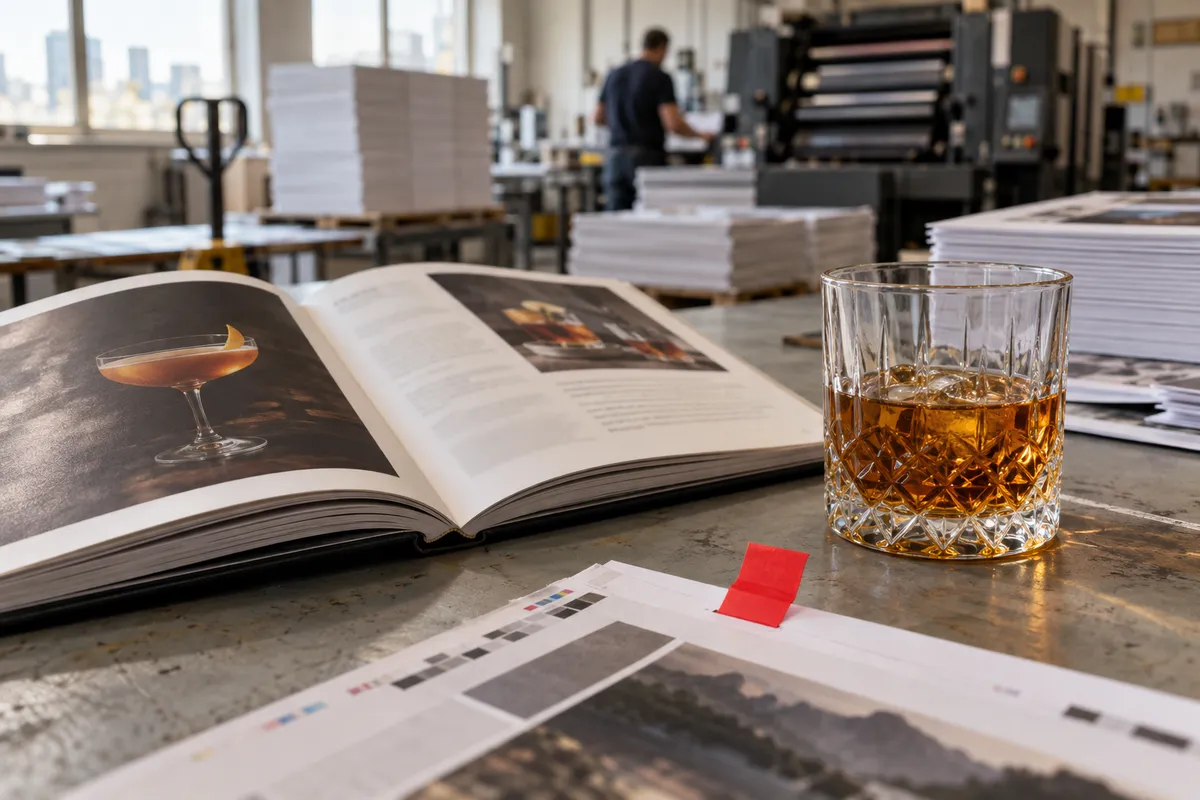
A cocktail book has become an unlikely geopolitical flashpoint. According to a first-person account in Slate, a Chinese printer flagged the book for mentioning Taiwanese whiskey. That set off an unexpected fight between the authors and their publisher over language, censorship, and production logistics.
The piece is titled "The Surprise Censorship Battle Over My Cocktail Book Has Left Me Shaken—and Stirred." (Yes, the pun is doing heavy lifting, and honestly, it earns its keep.) Its description adds a wry note: the episode "backed us into a corner on timing, but I can still complain!"
What Actually Happened
Here is what Slate's account establishes. A book about cocktails, a product most of us would file under "harmless, slightly boozy fun," was flagged by its printer in China because it referred to Taiwanese whiskey. The authors and publisher then had to deal with the problem as it unfolded, wrestling with wording and the practical reality of getting a book made on schedule.
The writer's larger argument, per Slate, is that China's censorship pressure no longer stops at big corporations. It now reaches niche cultural products too: books, museum catalogs, and food-and-drink publishing.
The Angle: Your Bar Cart Has a Supply Chain
Here's the take, and it's mine rather than Slate's: we tend to think of censorship as something that happens to newspapers, films, and tech platforms. A cocktail book is the opposite of a manifesto. Nobody picks one up expecting a position on cross-strait relations. They want to know how much vermouth goes in the Manhattan.
That's what makes the story so useful. A bottle of whiskey is about as tangible as a political argument gets. You can pour it, taste it, and photograph it for the grid. When a printer treats a mention of it as a problem, an abstract idea (that where something is made can shape what it is allowed to say) suddenly has a flavor profile.
Why Books End Up Overseas
The reason this matters now, according to the framing of the piece, is that global supply chains keep creative industries dependent on overseas production. Publishers who want lavish, full-color, reasonably priced books often rely on printers abroad. It's hard not to wonder how many of the handsome volumes on your shelf got there through that same pipeline, and what conversations happened along the way that never reached the acknowledgments page.
That is the quiet cost of the beautiful, affordable book: the price on the cover doesn't list the compromises that may sit behind it. To be clear, Slate's account concerns one cocktail book, and I'm not claiming to know how any other title was handled.
Why "Taiwan" Keeps Showing Up in Strange Places
The Slate piece lands amid growing concern over China's transnational influence on speech, business, sports, entertainment, and publishing. Pop-culture followers will recognize the pattern of a single word suddenly becoming a headache in places it has no obvious business being a headache. The cocktail book belongs to that family of stories, just with better garnishes.
What stands out is the scale. Nobody is accusing a whiskey recipe of threatening a nation. The point is that the gatekeeping happens upstream, at the practical, unglamorous stage where someone is simply trying to run a press. By the time a reader holds the finished book, any trace of a negotiation has been stirred in and strained out.
The Timing Trap
One detail worth lingering on from the Slate description is the timing. When a flag like this surfaces late in production, authors and publishers have little room to negotiate on principle. Deadlines, print slots, and holiday-season shelves don't wait for a debate. It's easy to see why the writer says the situation left them backed into a corner.
That's my read, not a claim about the specifics: pressure works best when it arrives at the moment resistance is most expensive. A schedule can do the censor's work without anyone raising their voice.
What a Drinker Can Take From This
You don't need to swear off cocktail books, or Taiwanese whiskey, to take something from this. A few small habits of attention go a long way:
- Notice where your books, maps, and catalogs are printed, since it's usually on the copyright page.
- Treat a missing or oddly phrased mention in a food-and-drink title as a question worth asking, not an accusation.
- Read first-person accounts like this one, because they surface decisions that normally stay invisible.
The Last Pour
The sharpest irony here is how ordinary the object is. A cocktail book exists to make people feel at ease, to help them host and unwind. If even that can end up caught in a dispute over a single bottle's origin, then the real lesson is that no product is too small or too delicious to be political. It's just that somebody, somewhere, has to decide whether to print the word, and most of us never learn they were asked.