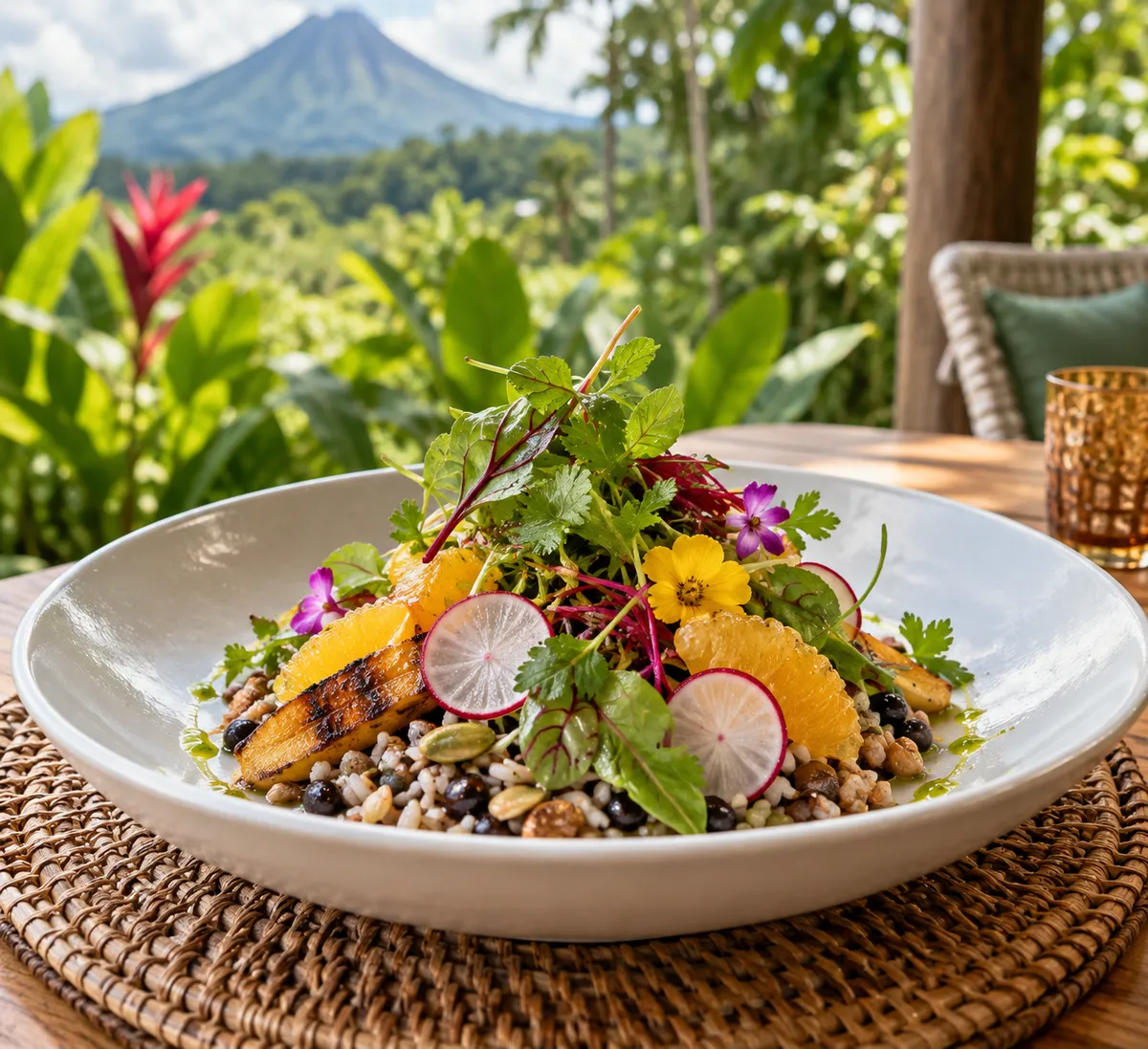
Fine dining around La Fortuna, Costa Rica, is turning toward the jungle that surrounds it. Forbes reports that local ingredients and traditional Costa Rican cooking are increasingly becoming the kind of dining luxury diners prefer. The piece, which appeared this month, frames the region as a place where regional cuisine is becoming a premium draw.
That is the news. What follows is my read on why it's happening, and why it makes sense.
The Luxury Flex Has Changed
For a long time, a fancy dinner abroad meant a dining room that could have been dropped into any major city on earth. Same tasting-menu choreography, same imported everything, a view as the only clue to your location.
Forbes points to a different instinct. As travelers look for more authentic, place-based food experiences, restaurants are turning regional cuisine into the main attraction. It fits, per the outlet, into a broader shift toward sustainable, local, and culturally grounded luxury travel.
It's hard not to see the logic. If you've flown a long way to be surrounded by jungle, a menu that could exist anywhere starts to feel like a missed opportunity. The most exclusive thing a restaurant can offer now is a dish you can't get anywhere else.
Why La Fortuna Works as a Setting
La Fortuna sits near Arenal, and Forbes describes the dining there as rooted in the jungle. Details are what separate a good story from a brochure, and the full Forbes piece is the place to go for the specific restaurants and dishes. What the outlet's framing makes clear is the shape of the idea: jungle landscapes, local sourcing, and Costa Rican culinary heritage meeting at the high-end table.
This is the farm-to-table playbook, with the farm replaced by a rainforest backdrop. Anyone who has followed the last two decades of restaurant culture will recognize the lineage: the push to cook what's grown nearby, and to treat regional tradition as something to celebrate rather than polish away. What's different here is the setting and the target audience, travelers who are willing to pay for the sense of place.
Tradition Gets the Tasting-Menu Treatment
The other half of the story is the cooking itself. Forbes says traditional Costa Rican cooking is part of what's drawing luxury diners. That's a quiet but meaningful flip: home-style food, the kind families have made for generations, is the thing being treated as aspirational.
It's the same arc that has played out for plenty of cuisines. A cooking tradition spends years as everyday fare, then a wave of chefs and diners decides it deserves a spotlight, white tablecloths optional. The smart version of this trend doesn't erase the original dish. It respects it, sources it well, and lets the ingredients do the talking.
What Sustainable Travel Looks Like on a Plate
There's a practical upside to the whole idea, and Forbes ties it to the sustainability thread. When a menu leans on what's local, a meal becomes one of the more direct ways a visitor can engage with a place. You can't bring home the jungle, but you can taste it.
That's my interpretation, not a claim about any particular restaurant. The broader point from Forbes stands on its own: travelers want food that is local, sustainable, and culturally grounded, and restaurants are responding.
How to Eat Like You Mean It Near Arenal
Without inventing specifics the reporting doesn't give, a few sensible takeaways follow from the trend itself:
- Ask what's local. If a menu is built around regional ingredients, servers will usually be glad to tell you where things come from.
- Order the traditional dish. If a kitchen is putting a refined spin on Costa Rican cooking, that's the dish that explains the whole concept.
- Read the Forbes piece first. For names and particulars, the original reporting is the best starting point before you book anything.
The Takeaway
The most interesting luxury on offer in La Fortuna may be the least imported one. In a travel era obsessed with authenticity, the high-end move is no longer flying in the ingredients. It's walking outside, looking at the jungle, and cooking what grows there.