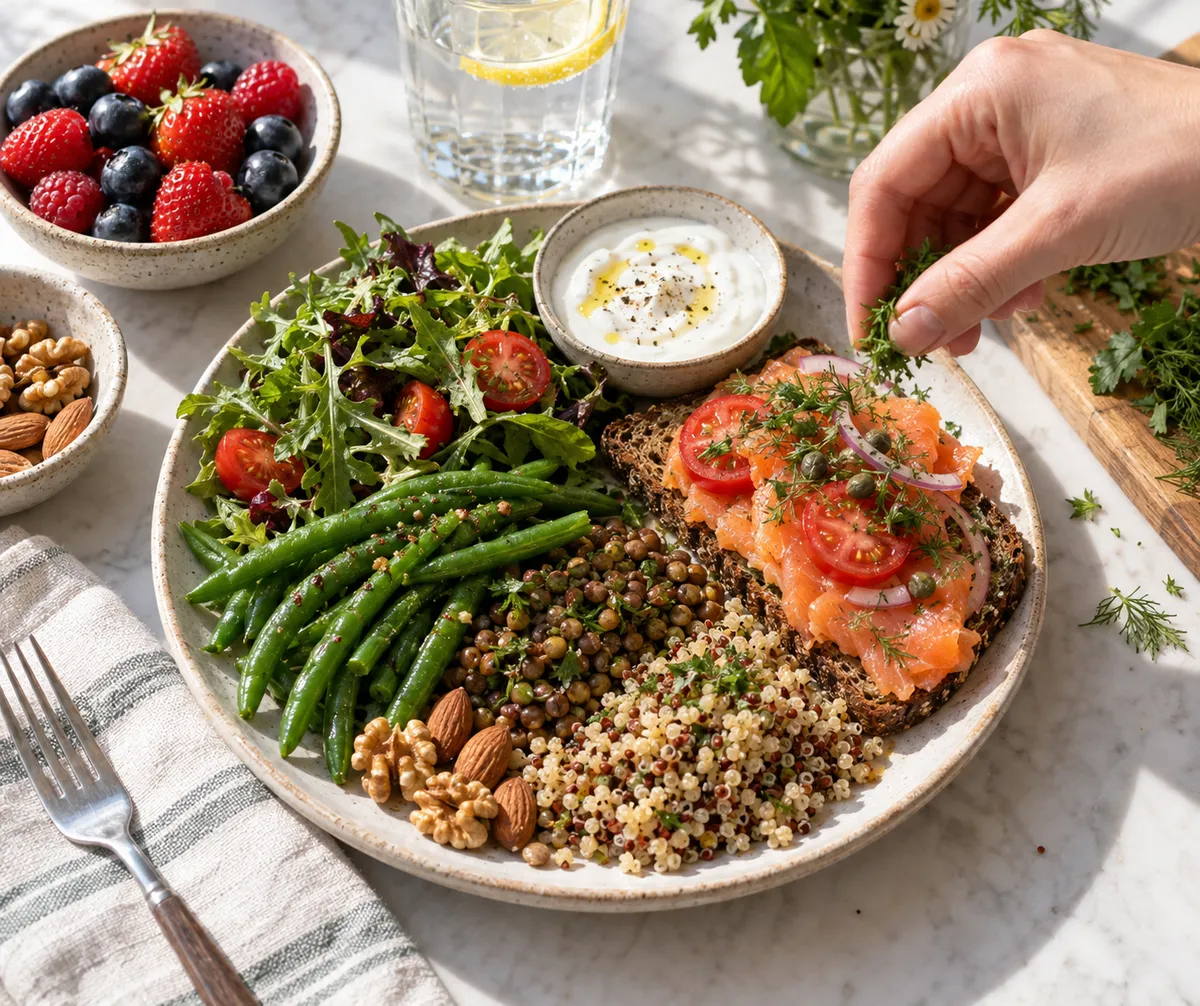

Vogue has published a personal essay with a title that works as a recipe card: "First, End Your Marriage. Then, Cook Rice." The author writes about her first night in a sublet apartment, apart from her children and her husband, and away from the home she'd shared for 24 years. Per her opening line: "I cooked and my sister came over."
That's the whole scene, and it's the point. In a genre that usually reaches for courtroom drama or a glossy reinvention montage, this essay starts with a pot on a stove.
The Unglamorous Hour
The essay centers on butter rice, cooked with her sister present, as a grounding ritual on a night when the ground had shifted. I'm working from the essay's framing here, not a full transcript, so I'll stick to what's reported: a sublet, a first night, a sister, a dish.
It's easy to picture the opposite version of this story, the one that pop culture has trained us to expect. Think of the divorce-as-glow-up arc: the dramatic haircut, the wine pour, the sweeping score. Our collective screen memory of separation is mostly big gestures. This essay's pitch is smaller, and I'd argue braver. Nothing is resolved by dinner. Dinner just happens.
Why Rice, Why Butter
Here's my take, and it's visibly mine: butter rice is about the lowest-stakes dish a person can make. There's no technique to botch, no guest list to impress, and almost nothing to buy. When your life has just been rearranged, a recipe that asks so little may be exactly the kind that works.
That's the idea at the heart of cooking as coping. A familiar dish gives your hands a job while your head catches up. The smell of butter and warm grain is a sensory signal that says you know how to do this, at a time when very little else feels certain.
It's also worth being clear about what the essay doesn't claim. It doesn't say cooking fixes anything. It treats the meal as an anchor, not a cure.
The Sister Is the Co-Star
The detail I keep returning to is the sister's visit. She isn't described as arriving with advice or a pep talk. She comes over, and she's there while the cooking happens.
It's hard not to read that as the quiet thesis of the piece: presence beats eloquence. Anyone who has been on the receiving end of a hard week knows the difference between the friend who says the perfect thing and the friend who simply shows up and sits in the kitchen. The second kind rarely makes it into movie scripts, but they're usually the ones people remember.
Shared meals have long been a staple of the screen, from the sitcom couch to the prestige-drama kitchen table. The best of those scenes, in my opinion, are the ones where nobody announces what they mean. This essay seems to understand that instinct.
Making Do, Beautifully
A sublet kitchen is a particular kind of stage: borrowed, half-familiar, not yours yet. Cooking in one on night one means improvising, and that's part of the appeal. The essay's emotional register, as described by Vogue's framing, is quiet resilience and self-discovery rather than conflict or loss.
That's a notable choice, because separation stories tend to be told through the lens of what ended. Here, the focus is on what begins: a first meal in a new place, with one person who showed up to share it.
The Takeaway for the Rest of Us
You don't need to be going through a divorce to borrow the move. Most of us will hit a night when the day has been too big and the evening needs to be small. Having one dish you can make without thinking is a form of preparedness, a pocket-sized emotional first-aid kit that happens to be delicious.
So consider this a gentle nudge to know your rice. Whatever your version is, whether buttered, salted, or simply steamed, keep it in your back pocket, along with one person you could text to come over.
The essay's best trick is its order of operations. Big life events get the headline, but the rice gets the last word, and honestly, that feels about right.