
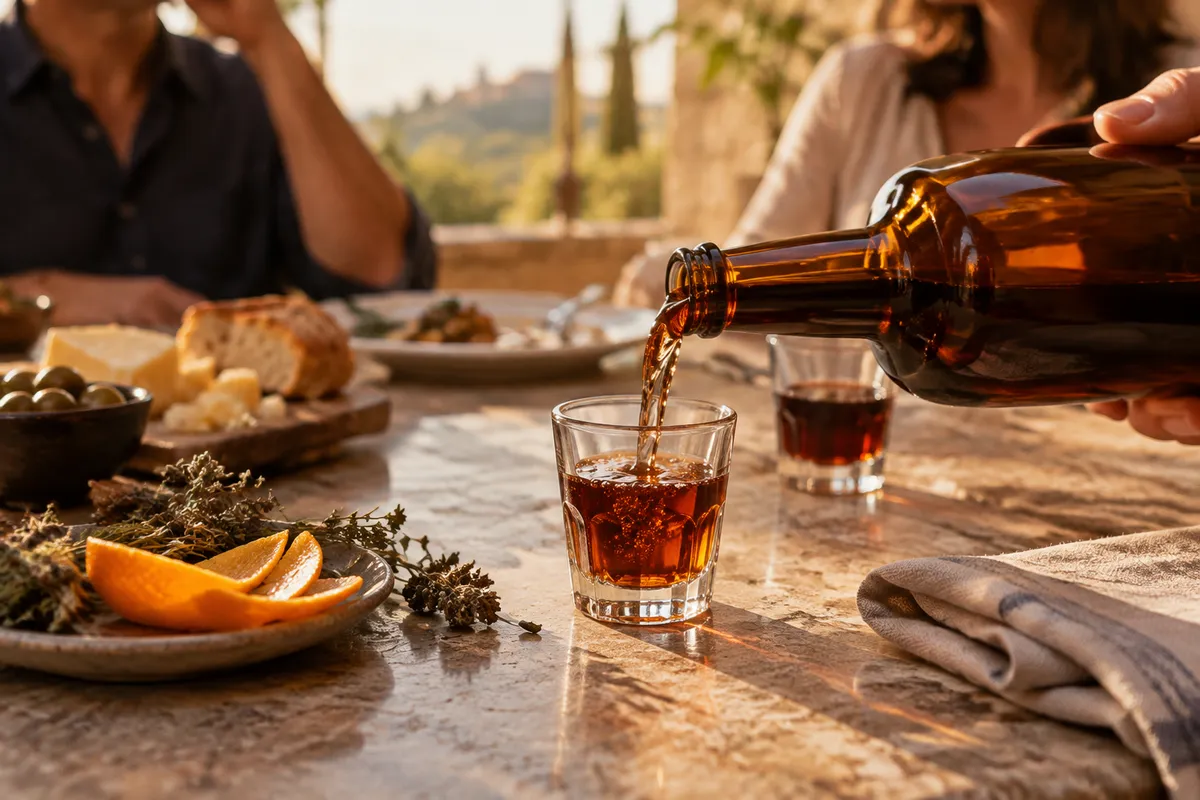
Forbes has a new look at one of the drinks-world's more charming glow-up stories: how amaro went from monastic medicine and herbal remedies to one of Italy's most enduring after-dinner rituals. The bitter liqueur, per the outlet, started its life as something closer to a remedy than a nightcap, and it ended up as the thing Italians reach for when the meal is over and nobody wants to leave the table yet.
It's a good arc. Think of it as the ultimate career pivot: from the monastery to the dinner party.
From Herbal Cure to Table Tradition
According to Forbes, amaro's roots lie in monastic communities, where herbal infusions and remedies were part of the practice. The through-line of the story is that the drink began as medicine and gradually became a social ritual across Italy.
That shift is the whole fun of it. A preparation made for a practical purpose turned into something people look forward to. It's hard not to see the logic: if you are going to drink something bitter and herbal because it is supposed to be good for you, the easiest way to make it a habit is to attach it to a pleasant occasion. Dinner is the pleasant occasion.
The report details on specific monasteries, recipes or dates are beyond what Forbes' piece, as summarized here, lets me confirm, so I'll resist the temptation to hand you a tidy origin myth with a named monk and a year. Plenty of those float around. Treat any you hear with a raised eyebrow.
The Digestif Slot
What the coverage does establish is that amaro became a cornerstone of Italian digestif culture and post-meal tradition. It occupies a particular seat in the structure of an Italian meal: the end. Not dessert's rival, not an aperitivo, but the closing note.
There is something nicely counterintuitive about that. We are conditioned to think the finale of a feast should be sweet, rich, and a little bit extra. Amaro's pitch is the opposite: after all that, here is something bitter. Call it the palate's equivalent of the credits scroll, a deliberate comedown that lets the evening settle. That is my read, not Forbes', but it explains why a bitter drink could become beloved rather than merely tolerated.
Why It's Having a Moment
The timing of the story isn't accidental. Amaro has seen a global resurgence in craft cocktail culture and premium spirits consumption, which is why its backstory suddenly feels relevant to people who might never have set foot in an Italian trattoria.
If you've seen it on a cocktail list lately, you've seen the trend in action. Bartenders have embraced bitter, herbal flavors, and drinkers who came to amaro through a cocktail are now curious about the traditional way it's enjoyed. That curiosity loop, from bar menu back to history, is exactly where a story like this lands.
There's a pop-culture rhythm to it too. Plenty of old-world things get rediscovered by a younger audience that treats them as fresh. The difference here is that amaro never actually went away in Italy. The rest of the world simply caught up.
How to Sip It Like You Mean It
Forbes frames amaro as ritual, so the best way to honor that is to treat it like one. A few practical, low-risk takeaways from the spirit of the story:
- Save it for the end. Its place in Italian dining is after the meal, as a digestif. That timing is the point.
- Go slowly. A drink with a monastic past is not built for chugging.
- Make it social. The coverage describes a beloved social ritual, so pour for the table rather than drinking alone at the sink.
- Expect variety. Amaro is associated with regional variations across Italy, each distinct, which makes tasting more than one a fun project. I can't tell you which region does what based on what's here, so ask a good bartender or bottle shop rather than trusting a confident stranger.
The Takeaway
The appealing thing about amaro's story is how little it has to be dressed up. A drink that began in the world of herbal remedies earned its permanent spot in Italian life not by being the sweetest or flashiest option, but by being the one that gave a long meal a graceful ending.
So the next time a bartender slides over a small glass of something dark and bitter, consider it a tiny piece of edible history. Then do what Italians have apparently been doing for a long time: sit back, sip, and let the night take its sweet time ending.