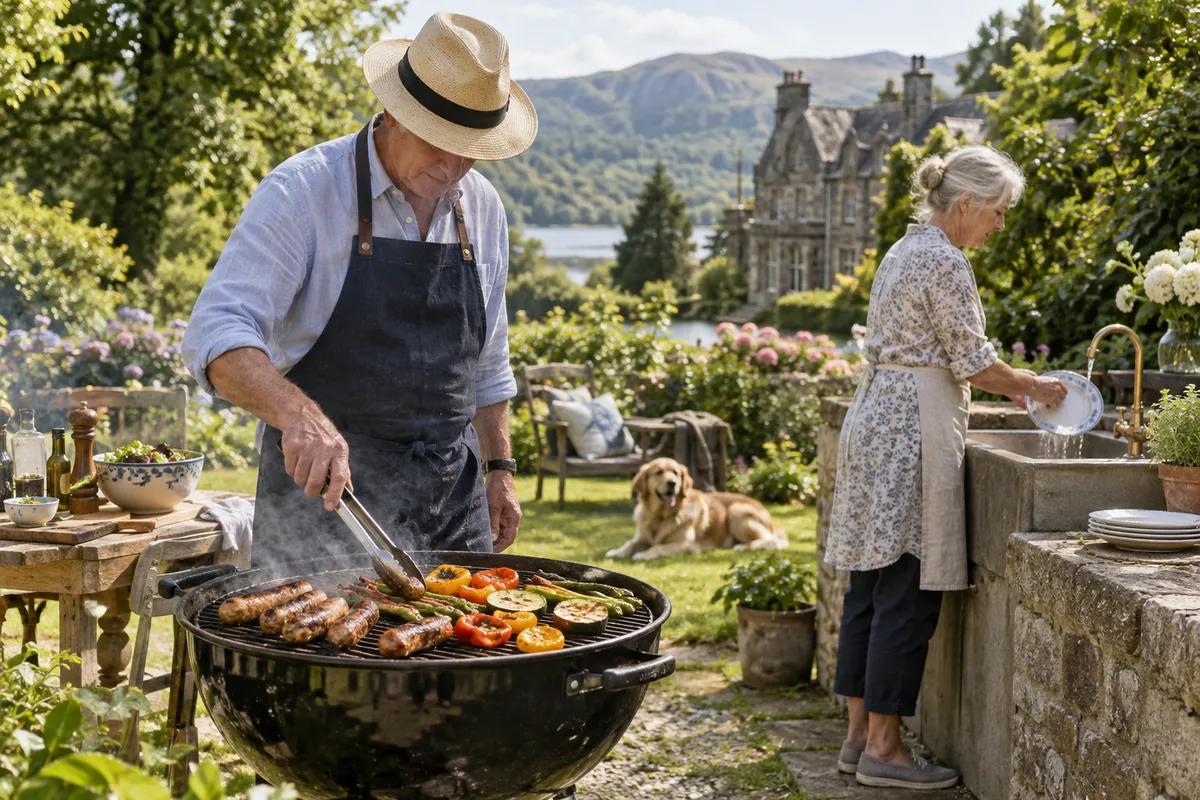
Somewhere in the Scottish Highlands, a prince stood over a barbecue while a queen rolled up her sleeves at the sink. That's the picture painted by Darren McGrady, the chef who cooked for Queen Elizabeth II for 15 years, in a piece originally reported by Vanity Fair. His claim: during summers at Balmoral, all the royals lent a hand at mealtime.
It's a small domestic detail, and it's exactly the kind that sticks. The monarchy runs on ceremony, so the idea of its most senior members dividing up kitchen duties like any family after a long weekend has a pull that a state banquet never will.
The Setup: Balmoral as the Anti-Palace
Balmoral, the Scottish estate, is framed in the coverage as the place where royals dropped formality and behaved more like a close-knit family. It was also Queen Elizabeth II's beloved retreat and the backdrop for plenty of royal family memories.
That contrast is the whole appeal. Buckingham Palace is where the pageantry happens. Balmoral, by McGrady's account, is where the pageantry gets switched off and somebody asks who's handling the sausages.
Prince Philip: Master of the Barbecue
The star of the story is Prince Philip, whose love of barbecuing is the centerpiece of the piece. In McGrady's telling, the summer cookout was very much his domain.
It's hard not to enjoy how recognizable this is. Nearly every family has one: the person who claims the grill, guards it from helpers, and treats tongs as a badge of office. That this archetype exists in the House of Windsor, with the Duke of Edinburgh in the role, is the kind of detail that makes a fan grin. (That reading of the dynamic is ours, not McGrady's.)
The barbecue is also a neat fit for Balmoral's whole ethos. Grilling is informal, a little improvised, and hands-on by nature. It's the opposite of a plated, multi-course dinner served with protocol.
The Queen Takes the Dishes
The other half of the story is the one that really lands. Per the Vanity Fair report, Queen Elizabeth II had a surprisingly hands-on habit of washing dishes. After the meal, the monarch pitched in.
There's a pleasing symmetry here. Philip commands the fire; the Queen handles the cleanup. Whether anyone at Balmoral would have described it as a division of labor, we can't say, and McGrady's account as summarized doesn't claim it. But as a picture of a household where nobody was exempt from the chores, it's hard to beat.
Why We're Still Charmed
Royal nostalgia has staying power, and behind-the-scenes domestic details travel especially well right now. Audiences seem hungry for intimate, human views of public figures, and a story about the Queen at the sink does more humanizing work than a dozen official portraits.
There's also the source. McGrady isn't a distant commentator; he cooked for the Queen for 15 years. When a chef who worked in those kitchens says everyone helped out, it carries the weight of someone who watched it happen.
Steal the Balmoral Playbook
You don't need a Highland estate to borrow the idea. A few takeaways, strictly in the spirit of the story:
- Pick a grill captain. Every cookout runs better with one person in charge of the fire. Philip, per McGrady's account, was happy to be that person.
- Everybody helps. If the Queen was washing up, the rest of us have run out of excuses.
- Drop the formality. The whole point of Balmoral, as described, was relaxing the rules. The same goes for your backyard.
The Takeaway
The fantasy of royal life usually involves tiaras and balconies. The more disarming version, if McGrady's recollections are the guide, involves smoke from a grill, a stack of dirty plates, and the most famous woman in Britain standing at the sink. Crowns are optional; somebody still has to do the dishes.